Late September
The music festival is a guest.
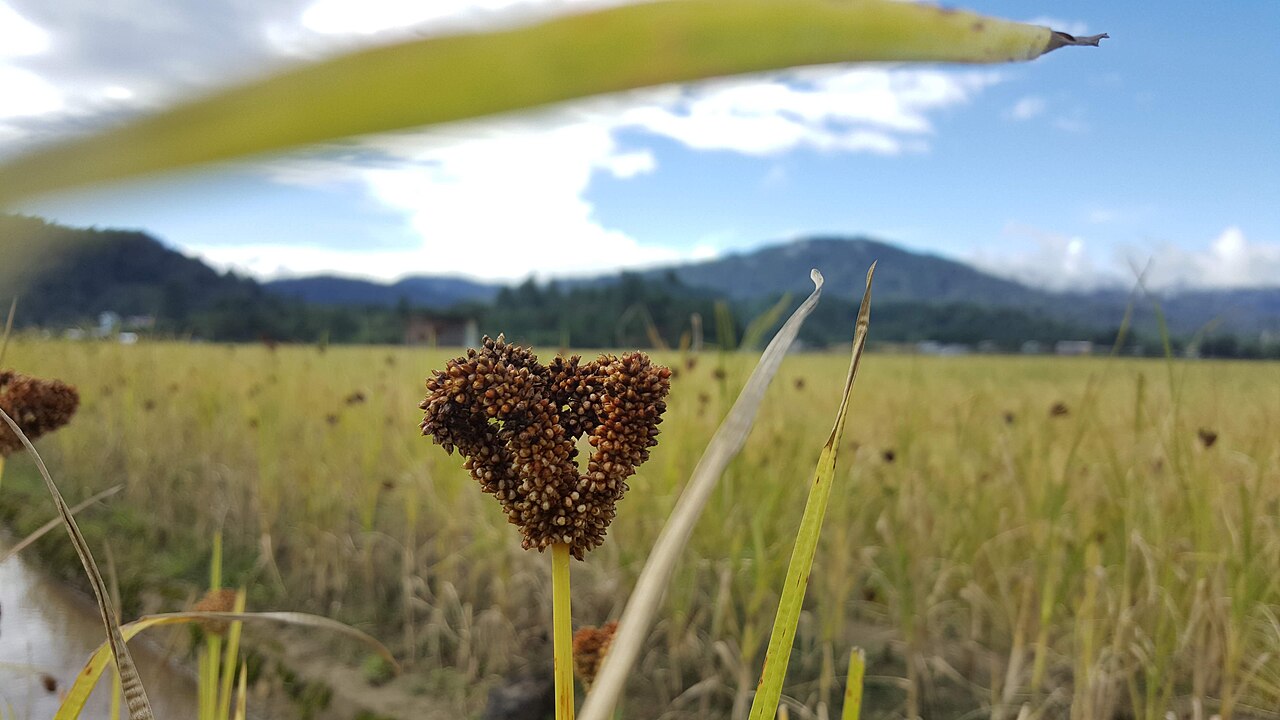
The Ziro Festival of Music is an outdoor festival of independent bands, held in Ziro valley since 2012. It lasts a few days. It is not an Apatani rite. Myoko, Dree, and Murung would be here if the bands had never come. The millet in the photograph was standing during the 2019 festival. The field was not planted for the weekend.
M.N Homestay is a family house in Mudang Tage village. It is not the festival ground, and a bed here is not a ticket.
How it started
A postponed gig.
In 2011 the Delhi band Menwhopause was playing through the Northeast. Their show in Itanagar was postponed when a curfew shut the town. Bobby Hano, who was promoting them and whose home is Ziro, took them to the valley instead. Anup Kutty, the band’s guitarist, has described sitting on the hill by the old Circuit House, looking over the wartime airstrip, and talking about what it would be like to put musicians from elsewhere on that ground. The Arunachal Pradesh tourism office was willing. The first festival was announced for the next year.
It ran from 14 to 16 September 2012. Three days, one stage, more than twenty bands. Menwhopause played. So did Lou Majaw, Peter Cat Recording Co, Sky Rabbit, and Bombay Bassment, with bands from Shillong, Kohima, Imphal, and from Delhi and Mumbai. Hano’s side of the organisation was Phoenix Rising India. The point they stated then was a shared stage for the Northeast and the rest of the country, in a valley most of that audience had not reached.
It has continued. Some later editions have run for four days, and names from outside India have been added. The first one sat in the middle of September. Later ones have often sat later in the month, after the rice has come up and before the valley turns cold. The exact dates are published by the festival each year. This house does not publish them. A wrong date on a homestay page is worse than none.
What the days are
Somebody else’s field.
People come for the bands. They walk the paths between plots, they are offered apong, the rice beer, and they sleep in homestays, camps, and whatever floor a village can spare. The audience is young, and a good part of it has travelled. For three or four days the lane sees more strangers than the rest of the month.
The ground is still an Apatani agricultural landscape. UNESCO’s tentative list includes it for the rice-and-fish terraces and the villages that keep them, not for the festival. The festival borrows the view. When the vans leave, the bunds are the bunds again. If you are here for the music, stay on the paths, do not cut through a standing crop for a shorter walk to the stage, and do not assume a ceremonial ground from Myoko is a picnic site because the valley feels public that week.
Arunachal decides who may enter the state. Indian visitors are asked for an Inner Line Permit. Foreign visitors are asked for a Protected Area Permit. The rules and the office that issues them change more often than a printed paragraph should pretend to track. Check the current requirement before you book a flight. The house can tell you what guests have needed lately. It cannot issue the permit.
What it is not
Repeating does not make a rite.
Because the festival returns every year, people fold it into the Apatani calendar. That is a mistake. Myoko is a month of owed hospitality between villages, taken in turn. Dree, on 5 July, is a prayer for the rice and a week of leaving the fields alone. Murung is one household’s largest rite, in January, with the village gathered because they are bound to that house. None of those has a lineup, a wristband, or a stage plot.
The festival’s own founders have been clear that they were inviting bands to a place they loved, not reviving a ritual. Apatani hosts have made the days possible: food, rooms, patience, and the decision to let a crowd onto the edge of the fields. That hospitality is real. It does not rewrite the guest as a god of the crop.
At the house
A room in Mudang Tage is a room.
During the festival the valley fills. Homestays fill first. M.N has a single and two twins. If those beds are promised, they are promised to named guests, not held as a festival annex. There is no camping in the lane, and the balcony is not a venue.
Write early. Name the dates. Book the room and pay for the stay. Buy the festival ticket from the festival, if you want the music. One does not include the other.
If you only wanted the valley, come in a different month. The fields in the photograph are the reason the bands wanted to play here. They are also here when the stage is gone.
Millet during the Ziro Festival of Music, 2019: Arun Katiyar, CC BY-SA 2.0. The first edition’s dates and the account of how it began are from the organisers’ own telling in 2012. Later lineups are not listed here.
_(48868968917).jpg)